

Menopause is a natural transition that every woman goes through, but let’s be honest—it can sometimes feel like a bit of a rollercoaster. While it marks the start of a new chapter, the shifts in your hormones can really impact how you feel, both physically and emotionally. You might be dealing with things like hot flashes, interrupted sleep, or a sudden change in your mood and energy. If any of this sounds familiar, please know you’re not alone, and there is so much you can do to feel more like yourself through a thoughtful menopause diet plan.
The right nutrition can be incredibly supportive during this time. As a top nutritionist in India would recommend, focusing on nourishing foods like good-quality proteins, healthy fats, and plenty of vitamins and minerals can give your body the essential tools it needs to reduce inflammation, maintain strong bones, and keep blood sugar steady. When healthy eating for menopause is combined with good rest and regular movement, it can make a remarkable difference in helping you feel more vibrant, confident, and balanced.
In this guide, I’ll walk you through the most supportive foods and simple strategies to help you find your balance and keep your energy high throughout this phase of life.
Don’t Just Manage Menopause — Nourish Your Way Through It!
Getting to Know Menopause and How Your Body Changes
Simply put, menopause is when you haven’t had a period for 12 months in a row. For most women, this happens somewhere between 45 and 55, though everyone’s timing is a little bit different.
During this time, your body’s levels of estrogen and progesterone start to dip. Because these hormones play a part in so many things, from your metabolism and heart health to how well you sleep, these changes can ripple through your whole day, affecting your mood and even your bone strength.
You might notice a few common signs, such as
- Hot flashes
- Night sweats
- Mood swings
- Anxiety and irritability
- Weight gain, particularly around the abdomen
- Fatigue
- Poor sleep quality
- Joint pain
- Reduced bone density
- Dry skin and hair
While some women choose hormone therapy, menopause nutrition is one of the most effective and natural ways to help manage these symptoms and support your long-term health.
Why What You Eat Really Makes a Difference
As your hormones shift, your body starts to handle things like blood sugar and weight a little differently. You might find it’s easier to gain weight even if your habits haven’t changed much. This is often because metabolism naturally slows down a bit, and those lower estrogen levels can change how your body stores fat.
A thoughtful, healthy diet for menopause can be a real game-changer by
- Supporting hormone production
- Reducing inflammation
- Preserving lean muscle mass
- Improving gut health
- Supporting heart health
- Maintaining healthy bones
- Reducing the severity of hot flashes
- Managing blood sugar levels
- Promoting healthy weight management
Instead of focusing on restrictive rules, it’s all about choosing nutrient-dense whole foods that truly nourish and sustain you.
Nourishing Foods to Help You Thrive
1. Prioritize Quality Protein
Getting enough protein is one of the kindest things you can do for your body right now. It’s essential for a solid menopause diet plan.
Protein helps you keep your muscle mass, keeps you feeling full and satisfied, and supports both your metabolism and your bone health.
Here are some great options to include
Vegetarian
- Paneer
- Greek yogurt
- Tofu
- Tempeh
- Lentils
- Moong dal
- Chickpeas
- Kidney beans
Non-Vegetarian
- Eggs
- Chicken
- Fish
- Lean meat
A good rule of thumb is to try and include some protein in every meal.
2. Focus on Calcium-Rich Foods
Since lower estrogen levels can lead to faster bone loss, keeping your bones strong is a top priority.
Make sure to get plenty of calcium from sources like:
- Milk
- Curd
- Paneer
- Cheese (in moderation)
- Ragi
- Sesame seeds
- Tofu
- Almonds
- Green leafy vegetables
Don’t forget that Vitamin D is just as important—it helps your body actually absorb all that good calcium.
3. Don’t Fear Healthy Fats
Healthy fats are wonderful for supporting your hormones, easing inflammation, and keeping your heart healthy.
Some of my favourites are
- Walnuts
- Almonds
- Pistachios
- Flaxseeds
- Chia seeds
- Pumpkin seeds
- Olive oil
- Avocado
- Fatty fish like salmon and mackerel
Omega-3 fatty acids are especially helpful for keeping your brain sharp and managing inflammation during this transition.
4. Fill Up on Fibre
Fibre is fantastic for your digestion, helps keep your blood sugar steady, and is great for your heart health.
Try to include more
- Oats
- Brown rice
- Millets
- Whole wheat
- Fruits
- Vegetables
- Legumes
- Beans
- Seeds
Aiming for around 25–30 grams of fibre each day will really help you feel your best.
5. Add a Splash of Colour
Antioxidants from bright fruits and veggies help protect your cells and lower the chronic inflammation that can come with ageing.
Look for vibrant options like:
- Berries
- Pomegranate
- Guava
- Papaya
- Oranges
- Amla
- Spinach
- Broccoli
- Carrots
- Beetroot
- Tomatoes
- Bell peppers
- Pumpkin
Eating a wide variety of colours ensures you’re getting a broad spectrum of protective plant compounds.
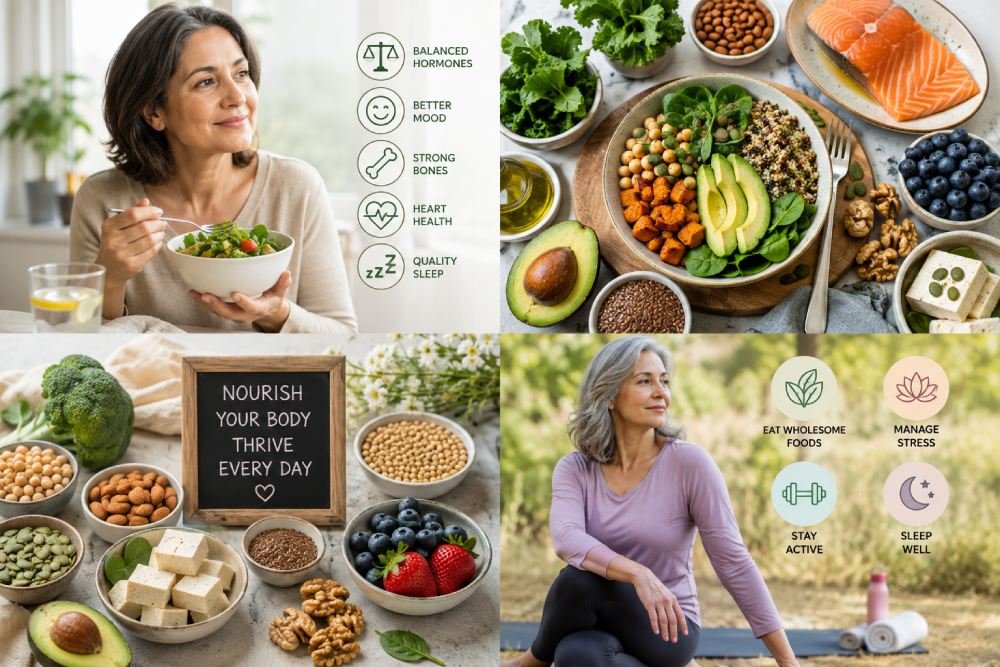
Foods That Support a Healthy Weight
It’s very common to notice a shift in where your body carries weight during menopause. This often happens because hormonal changes can slow your metabolism and change how your body stores fat.
A gentle menopause weight gain diet isn’t about being restrictive; it’s about choosing whole foods that keep you feeling satisfied.
Try to focus on:
- High-protein breakfasts
- Whole grains instead of refined grains
- Plenty of vegetables
- Healthy fats in moderation
- Fresh fruits
- Legumes
- Nuts and seeds
- Low-fat dairy
- Lean proteins
Try not to skip meals; it can lead to feeling over-hungry later and makes it harder to keep your energy and blood sugar levels steady.
Foods to Enjoy in Moderation
Some foods can unfortunately make those menopause symptoms feel a bit more intense.
It often helps to cut back on:
- Sugary beverages
- Cakes and pastries
- Refined flour products
- Deep-fried foods
- Processed meats
- Packaged snacks
- Excess salt
- Alcohol
- Excess caffeine (if it triggers hot flashes)
- Highly processed foods
Limiting these can really help improve your energy levels and help you feel more balanced overall.
Simple Food Tweaks to Help Tame Hot Flashes
While there isn’t a magic wand to make hot flashes disappear entirely, what you put on your plate can definitely help turn down the heat. Here are a few friendly additions that might make those sudden “personal summers” feel a bit more manageable.
Embrace Soy
Foods like tofu, tempeh, and edamame are packed with isoflavones. These are clever plant compounds that act a bit like a gentle version of the estrogen your body is missing. Many women find that a little extra soy in their diet helps smooth out those hormonal spikes.
The Power of Flaxseeds
Tiny but mighty, flaxseeds are great for your heart and your hormones. Try stirring a couple of teaspoons of freshly ground flaxseed into your morning yogurt or smoothie—it’s an easy way to help keep things balanced.
Omega-3s are Your Friends
Fatty fish like salmon and sardines aren’t just good for your brain—they help fight inflammation, too. Keeping that inflammation in check can be a real game-changer for your overall comfort during this transition.
Keep Your Cool with Hydrating Foods
When you’re dealing with night sweats or hot flashes, staying hydrated is key. Snack on juicy foods like watermelon, cucumber, and oranges to help your body stay cool and replenished from the inside out.
The Essential Nutrients You Need Now
Vitamin D: Your Inner Sunshine
This vitamin is your best friend for bone health and keeping your mood and energy up. Make sure to get some safe sun exposure, and look for D-rich foods like eggs, mushrooms, and fortified dairy.
Magnesium for a Better Night’s Sleep
If you’re feeling a bit frazzled or having trouble sleeping, magnesium is here to help. It’s wonderful for relaxing your muscles and calming your mind.
You can find plenty of it in
- Pumpkin seeds
- Almonds
- Spinach
- Cashews
- Black beans
Vitamin B12 for Energy
B12 keeps your nerves healthy and your energy levels steady. If you’re following a vegetarian diet, it’s worth chatting with your doctor about a supplement to make sure you’re getting enough.
Iron: Still Important!
Even though your iron needs go down a bit after menopause, it’s still crucial for feeling your best. Include plenty of leafy greens, beans, and lentils in your meals.
Great sources to keep on hand
- Green leafy vegetables
- Lentils
- Beans
- Lean meats
- Eggs
A quick tip: try pairing plant-based iron with a squeeze of lemon or some fresh fruit. The vitamin C helps your body soak up the iron much more effectively!
A Sample Menopause Diet Plan
Early Morning
- Warm water with lemon
- 5 soaked almonds and 2 walnuts
Breakfast
- Vegetable moong chilla with curd
OR - Vegetable omelette with multigrain toast
Mid-Morning Snack
- Guava or papaya
- Green tea (optional)
Lunch
- 1 Millet Roti
- Mixed dal
- Seasonal vegetable
- Salad
- Grilled chicken or paneer
Evening Snack
- Roasted chana
OR - Greek yogurt with seeds
Dinner
- Vegetable soup
- Stir-fried vegetables
- Grilled fish, tofu, or paneer
Bedtime
- Chamomile tea
This simple, realistic plan is all about giving your body the protein, fibre, and healthy fats it needs to feel balanced and energised every day.

Lifestyle Habits That Support Healthy Eating for Menopause
Diet alone cannot address every menopausal symptom. Pairing good nutrition with healthy lifestyle habits can make a noticeable difference.
Stay Active
Aim for at least 150 minutes of moderate-intensity physical activity each week along with 2–3 sessions of strength training. Building muscle supports metabolism, improves bone health, and helps manage weight.
Prioritise Quality Sleep
Sleep disturbances are common during menopause. Try maintaining a consistent bedtime, limiting screen time before bed, and creating a relaxing sleep environment.
Manage Stress
Hormonal changes can affect mood and emotional well-being. Yoga, meditation, breathing exercises, journaling, or spending time in nature can help manage stress.
Stay Hydrated
Drink around 2–3 litres of water daily. Proper hydration supports digestion, energy levels, and may help reduce discomfort from hot flashes.
Avoid Smoking
Smoking has been linked to earlier menopause, increased bone loss, and a higher risk of heart disease. Quitting smoking provides significant health benefits at every stage of life.
When Should You Seek Professional Nutrition Advice?
Every woman’s menopause journey is different. If you’re struggling with persistent weight gain, digestive concerns, fatigue, uncontrolled blood sugar, thyroid disorders, high cholesterol, or severe menopausal symptoms, consulting a top nutritionist in India can help.
A personalised nutrition plan takes into account your medical history, lifestyle, food preferences, and health goals to create sustainable changes that support long-term well-being.
Conclusion
Menopause is a natural phase of life, but the way you care for your body during this transition can make a meaningful difference. Following a balanced menopause diet plan rich in protein, fibre, healthy fats, calcium, vitamins, and antioxidants can help manage symptoms, support hormone balance, and improve overall quality of life.
Rather than focusing on restrictive diets, aim for consistent, nourishing food choices and healthy daily habits. Small changes made today can lead to lasting benefits for your health in the years ahead.
If you’re looking for expert guidance tailored to your unique health needs, Nutracy Lifestyle by Dr. Rohini Patil offers personalised nutrition plans designed to support women through every stage of menopause. With evidence-based dietary guidance and practical lifestyle strategies, you can confidently take charge of your health and embrace this new phase of life.
FAQ’s
A balanced menopause diet plan should include lean proteins, whole grains, fruits, vegetables, healthy fats, and calcium-rich foods. Eating nutrient-dense meals while limiting processed foods and added sugars can help manage symptoms, maintain muscle mass, support bone health, and improve overall well-being.
The best foods for menopause include leafy green vegetables, berries, soy foods, flaxseeds, fatty fish, nuts, seeds, whole grains, legumes, yogurt, paneer, tofu, and colourful fruits. These foods provide essential nutrients that support hormonal balance, heart health, and bone strength.
Yes. Proper menopause nutrition focuses on balanced meals rich in protein, fibre, and healthy fats that promote satiety and support metabolism. Combined with regular physical activity and strength training, it can help manage weight gain commonly experienced during menopause.
A healthy diet for menopause should include a variety of whole foods such as vegetables, fruits, whole grains, lean proteins, dairy or fortified alternatives, healthy fats, and plenty of water. Adequate calcium, vitamin D, magnesium, and omega-3 fats are also important for healthy ageing.
Healthy eating for menopause helps reduce inflammation, supports hormone balance, improves energy levels, preserves muscle mass, strengthens bones, and lowers the risk of heart disease. A balanced diet also contributes to better weight management and overall health during and after menopause.
Transform your plate, energy, and life with guidance from a dedicated dietician and nutritionist who truly understands your body.