
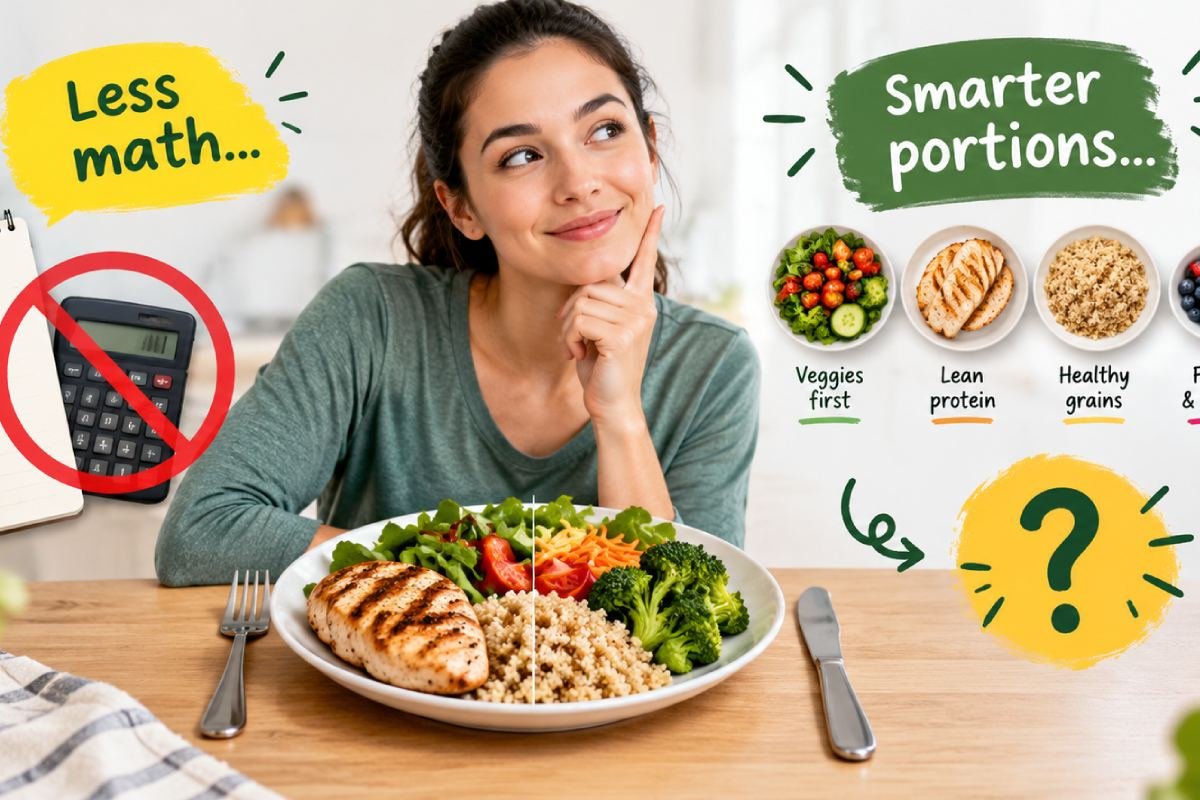
Have you ever started a weight-loss plan and found yourself constantly calculating calories?
“How many calories did I eat?”
“Is this meal 400 or 500 calories?”
“Should I skip dinner because lunch was heavy?”
For many people, counting calories can quickly become exhausting and difficult to maintain. Although being aware of calorie intake can be helpful, it is not the only approach to managing weight. A simpler and more sustainable strategy is weight loss dietitian in india guided portion control for weight loss.
Portion control does not mean eating extremely small meals or staying hungry throughout the day. Instead, it focuses on understanding how much food your body truly needs and building balanced, satisfying meals that support healthy and sustainable weight management.
The good news? You don’t need to carry a weighing scale everywhere or measure every bite to get started.
Get personalised guidance based on your body, lifestyle and health goals.
What Is Portion Control?
Portion control simply means being mindful of the amount of food you put on your plate and eat at a meal.
There is an important difference between a serving size and a portion.
A serving size is a standard amount mentioned on a food label or nutrition guide. A portion is the amount you actually choose to eat.
For example, you may decide to have two rotis, one bowl of dal and a bowl of vegetables for lunch. That is your portion for that meal.
The goal is not to make every meal perfect. Instead, it is to create a consistent eating pattern where your portions are appropriate for your hunger, activity level and nutritional needs.
Can Portion Control Really Help With Weight Loss?
Yes, it can.
Weight loss ultimately involves creating an appropriate energy deficit over time. However, you do not necessarily have to count every calorie to achieve this.
When portions become more balanced, you may naturally reduce excess calorie intake without feeling like you are following a strict diet.
For example, consider a typical Indian meal: two or three rotis, a large serving of rice, dal, sabzi, curd, a little pickle and perhaps something sweet afterwards.
There is nothing inherently wrong with these foods. The issue can simply be the overall quantity and combination.
By adjusting the portions of calorie-dense foods while increasing vegetables, protein and fibre, you can create a more satisfying meal without drastically reducing the amount of food on your plate.
That is where portions for weight loss become useful.
Why Portion Control Is Often Easier Than Calorie Counting
Calorie counting requires you to know the calorie value of almost everything you eat. This can become particularly difficult with homemade Indian meals, restaurant food and meals prepared for the entire family.
Portion control is more visual and practical.
Instead of asking:
“Exactly how many calories are in this meal?”
you can ask:
“Does my plate have enough protein?”
“Am I including vegetables?”
“Is my carbohydrate portion appropriate?”
“Am I eating because I am hungry or simply because the food is available?”
These simple questions can make healthy eating much easier to follow in everyday life.
What Should a Weight-Loss Plate Look Like?
There is no single perfect plate for everyone. Your requirements depend on factors such as age, height, body composition, activity, health conditions and goals.
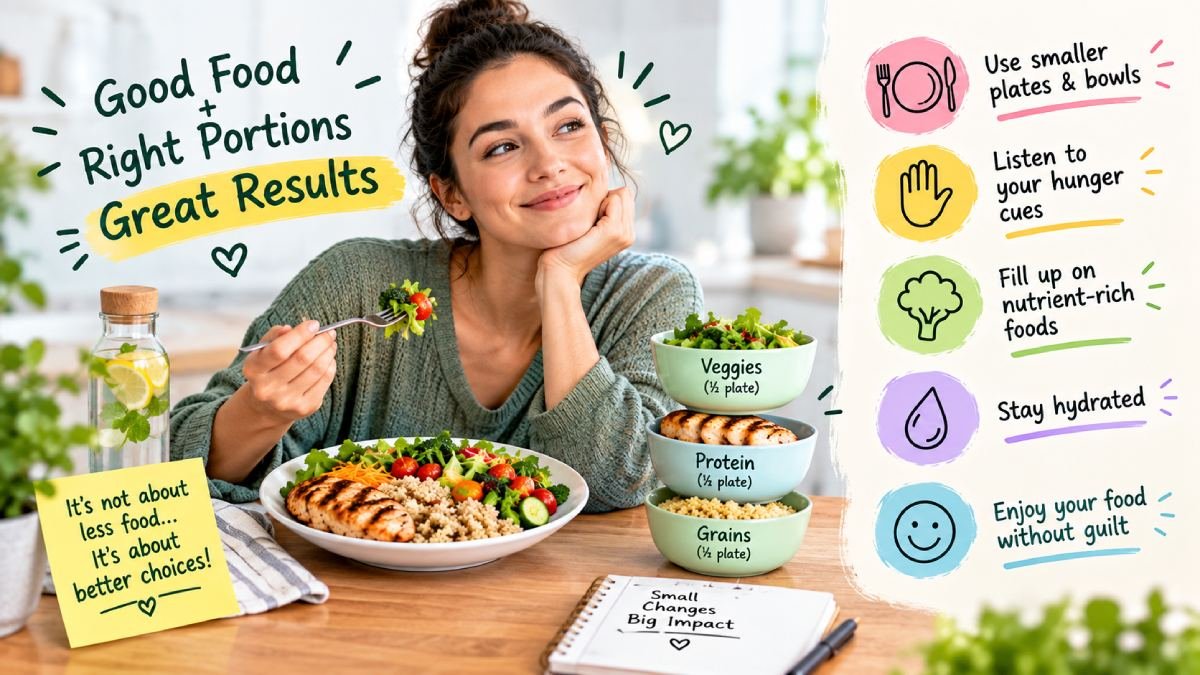
However, a useful starting point is to build meals around four components:
1. Protein
Protein helps make meals more satisfying and is important for maintaining muscle during weight loss.
Depending on your diet, this could include
- Dal and pulses
- Eggs
- Paneer
- Tofu
- Greek yogurt or curd
- Fish
- Chicken
- Soy products
Try to include a protein source in your main meals rather than relying primarily on rice, roti or other carbohydrates.
2. Vegetables
Vegetables add volume, fibre and micronutrients to your meal.
Include cooked vegetables, leafy greens, gourds, beans, carrots, capsicum, cauliflower, broccoli or other vegetables you enjoy.
If you are someone who struggles with large salads or raw vegetables, cooked vegetables work perfectly well.
3. Carbohydrates
Carbohydrates are not the enemy of weight loss.
Rice, roti, potatoes, millets, poha, oats and other carbohydrate-rich foods can be part of a healthy diet. The key is choosing appropriate diet portions for weight loss rather than eliminating carbohydrates completely.
Your requirement will depend on your activity and individual needs.
4. Healthy Fats
Nuts, seeds, avocado, dairy and cooking oils provide healthy fats, but they are also energy-dense.
This is where portion awareness becomes particularly important.
A handful of nuts can quickly become several handfuls when you are eating them straight from the packet. Instead, portion them into a small bowl before eating.
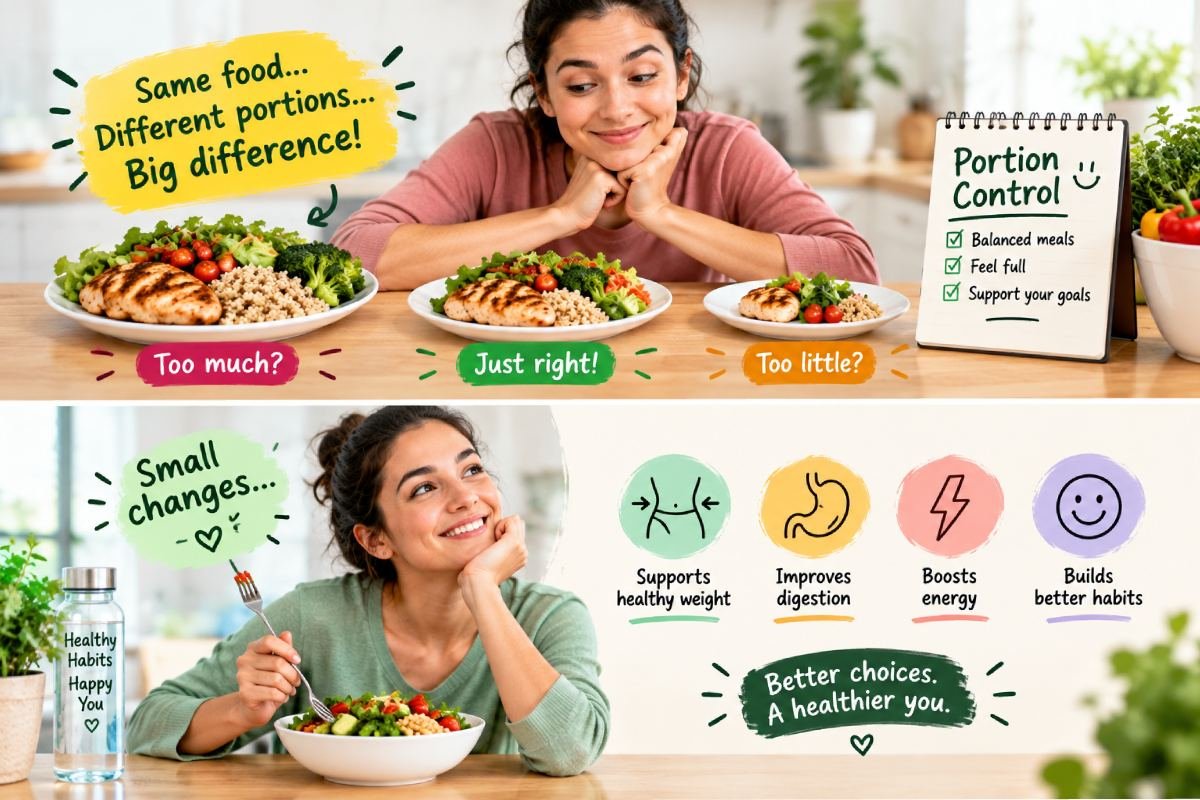
Practical Portion Sizes for Weight Loss
You don’t always need a weighing scale. Your hands and regular household bowls can act as simple guides.
For example
- Protein: approximately one palm-sized portion
- Cooked vegetables: 1–2 cups, depending on your requirements
- Rice: approximately ½–1 cup cooked
- Roti: usually 1–2, depending on your individual needs
- Nuts/seeds: a small handful or measured portion
- Fruit: one whole fruit or an appropriate serving
These are general guidelines, not fixed prescriptions.
Someone who is highly active may need considerably more food than someone who is sedentary. Similarly, a person with a specific medical condition may need a more personalised approach.
This is why portion sizes for weight loss should be individualised rather than copied from someone else’s diet.
Portion Control Does Not Mean Eating Less at Every Meal
This is one of the biggest misconceptions about portion control.
If you are constantly hungry, your portions may be too small or your meals may lack protein, fibre or sufficient carbohydrates.
A good weight-loss meal should leave you comfortably satisfied, not starving.
For example, instead of having a very small bowl of dal and vegetables and feeling hungry an hour later, you could create a balanced meal with dal, vegetables, an appropriate portion of rice or roti and curd.
The objective is sustainability.
If your diet leaves you hungry every day, it becomes much harder to maintain.
Portion Control Meals for Weight Loss: Indian Examples
You don’t have to completely change the food you eat to practice portion control.
Breakfast
- Vegetable poha + curd
- Moong dal chilla + paneer filling
- Eggs + vegetable upma
- Idli + sambar
- Greek yogurt + fruit + nuts
Lunch
- 1–2 rotis + dal + sabzi + curd
- Rice + rajma + vegetable salad or cooked vegetables
- Millet roti + paneer/tofu + vegetables
- Rice + fish/chicken + vegetables
Evening Snack
- Fruit + a small portion of nuts
- Roasted chana
- Curd with fruit
- Makhana
- Homemade protein-rich snack
Dinner
- Dal + vegetables + roti
- Paneer/tofu + vegetables + millet roti
- Chicken/fish + vegetables + rice
- Moong khichdi + curd + vegetables
The idea is not to eat “diet food.” It is to make the food you already enjoy work better for your goals.
Five Simple Ways to Improve Your Portions
1. Serve Your Food on a Plate
Eating directly from a packet, box or serving dish makes it difficult to recognise how much you have eaten.
Serve your portion first and then sit down to eat.
2. Eat Without Distractions
Try to avoid eating every meal while scrolling through your phone or watching television.
When you are distracted, it becomes easier to eat beyond your hunger.
3. Slow Down
Give your body time to recognise that it is becoming full.
You don’t need to eat extremely slowly, but try not to finish an entire meal in just a few minutes.
4. Don’t Automatically Take Seconds
Finish your first portion and pause for a few minutes.
If you are genuinely still hungry, you can take more.
5. Watch Liquid Calories
Sweetened coffee, sugary drinks, milkshakes, juices and frequent high-calorie beverages can add a surprising amount of energy without making you feel as full as a solid meal.
Water, unsweetened beverages and appropriately planned drinks can make portion management easier.
What About Eating Out?
Portion control becomes especially useful when eating outside.
Restaurant portions are often larger than what you would normally serve yourself at home.
You can
- Share a dish
- Order smaller portions where available
- Prioritise protein and vegetables
- Avoid automatically finishing everything on the plate
- Be mindful of sauces, fried sides and creamy preparations
- Stop eating when comfortably satisfied
You don’t need to avoid restaurants to lose weight. You simply need a strategy.
What If Portion Control Isn’t Working?
If you have been controlling portions consistently but are not seeing progress, don’t immediately make your portions smaller.
There could be other factors involved, including
- Inadequate protein
- Low physical activity
- Poor sleep
- High stress
- Frequent snacking
- Liquid calories
- Weekend overeating
- Hormonal or metabolic conditions
- Certain medications
- An inaccurate assessment of your actual nutritional needs
This is where a personalised approach becomes valuable.
A weight-loss plan should consider your lifestyle, medical history, food preferences, activity level and nutritional requirements rather than relying on a generic portion chart.
If you are looking for professional guidance, working with a weight loss dietitian in India can help you understand what portions are appropriate for your individual body and goals.
The Bottom Line
You don’t have to count every calorie to lose weight.
For many people, portion control for weight loss can be a practical and sustainable way to manage food intake while still enjoying familiar meals.
But portion control isn’t about eating as little as possible. It is about eating the right amount of the right combination of foods for your body.
Build meals around protein, vegetables, appropriate carbohydrates and healthy fats. Eat mindfully. Pay attention to hunger and fullness. And remember that your ideal portion may not be the same as someone else’s.
Most importantly, don’t aim for perfection.
A sustainable approach to weight loss is one that you can follow not just for four weeks, but for months and years.
FAQ’s
Recent Posts
- The 90-Day Bridal Diet: What to Eat Before Your Wedding for Weight Loss, Energy and Glowing Skin
- Vegetarian Muscle-Building Diet: How to Hit Your Protein Goals Without Supplements
- How to Get Enough Protein on an Indian Vegetarian Diet
- Hypothyroidism and Weight Gain: Why Losing Weight Can Feel So Difficult
- Weight Loss Without Counting Calories: Can Portion Control Really Work?
Transform your plate, energy, and life with guidance from a dedicated dietician and nutritionist who truly understands your body.