

You are eating better. You are trying to exercise. You may even be watching your portions carefully. Yet, the weighing scale seems to have a mind of its own.
If you have hypothyroidism, this can feel especially frustrating.
You may hear people say, “Just eat less and exercise more,” but hypothyroidism and weight gain can be a little more complicated than that. An underactive thyroid can affect how your body uses energy, making weight management feel slower and more challenging. Consulting the best dietician for thyroid in India can help you understand your nutritional needs and develop a realistic approach to managing your weight.
But having hypothyroidism does not mean that healthy weight loss is impossible. With the right medical treatment, personalised nutrition, regular movement and a sustainable lifestyle, weight management is absolutely possible.
Ready to Take Control of Your Thyroid & Weight?
What Is Hypothyroidism?
Hypothyroidism occurs when the thyroid gland does not produce enough thyroid hormones.
Thyroid hormones play an important role in how the body uses energy. They influence several body functions, including metabolism, heart rate, temperature regulation and normal functioning of different organs.
Common symptoms can include
- Tiredness
- Feeling unusually cold
- Constipation
- Dry skin
- Hair changes
- Changes in mood
- Difficulty concentrating
- Weight gain
However, these symptoms are not specific to hypothyroidism. Diagnosis is generally based on blood tests, particularly TSH and free T4, along with the clinical picture.
Why Do Hypothyroidism and Weight Gain Go Together?
This is where hypothyroidism and metabolism become important.
When thyroid hormone levels are low, the body’s energy expenditure can decrease. In simple terms, the body may use fewer calories than it would when thyroid function is normal. This can contribute to weight gain.
But there is an important detail that is often missed.
Not all weight gained with hypothyroidism is body fat. The American Thyroid Association notes that some of the weight associated with hypothyroidism can be related to salt and water retention. The amount varies from person to person and is generally more modest than people often assume.
So if you have gained a significant amount of weight, it is worth looking beyond the thyroid alone.
Your food intake, physical activity, sleep, stress, medications, genetics and other health conditions can all influence body weight.
Why Can Losing Weight Feel So Difficult?
There is rarely one single reason.
1. Your energy expenditure may be lower
Untreated hypothyroidism can reduce energy expenditure. This means the same diet that previously maintained your weight may no longer have exactly the same effect.
Once thyroid hormone levels are brought into the normal range with appropriate treatment, the ability to gain or lose weight is generally similar to that of people without thyroid problems.
2. You may feel more tired
When you’re constantly tired, exercising can feel like another task on your to-do list.
You may naturally move less during the day, take fewer steps or skip workouts. Over time, these small changes can influence your overall energy expenditure.
3. Weight loss expectations may be unrealistic
One of the biggest frustrations is expecting thyroid treatment alone to result in dramatic weight loss.
Treating hypothyroidism is essential, but levothyroxine is not a weight-loss medication. The American Thyroid Association notes that weight loss after treatment is usually modest, particularly because some of the initial weight change may be related to excess fluid.
4. Other lifestyle factors still matter
It is easy to blame every change in weight on the thyroid.
But inadequate sleep, stress, low activity, frequent snacking, high-calorie beverages and highly processed foods can also contribute to weight gain. Sleep, in particular, is associated with appetite and calorie intake.
This doesn’t mean your struggle isn’t real.
It simply means that managing your thyroid is one part of the bigger picture.

What Should You Eat? Understanding Hypothyroidism Nutrition
There is no magical “thyroid diet.”
A good approach to hypothyroidism nutrition is to build a balanced eating pattern that provides enough protein, fibre, vitamins, minerals and overall nourishment without unnecessarily restricting food groups.
1. Start With Protein
Protein is important for maintaining muscle and supporting satiety.
Include a protein source in your main meals, such as
- Eggs
- Paneer
- Tofu
- Greek yogurt or curd
- Dal
- Beans and pulses
- Fish
- Chicken
- Soy-based foods
The exact amount you need depends on your body size, activity level, age and health goals.
2. Include Fibre-Rich Foods
Constipation is a common symptom associated with hypothyroidism, although it can have many other causes.
Fibre-rich foods can support digestive health and overall diet quality.
Include
- Vegetables
- Fruits
- Whole grains
- Millets
- Pulses
- Beans
- Nuts and seeds
Increase fibre gradually and drink adequate fluids, especially if your current diet is low in fibre.
3. Don’t Be Afraid of Carbohydrates
One of the first things people often do when trying to lose weight with hypothyroidism is completely eliminate rice, roti or other carbohydrates.
You don’t necessarily need to.
Instead, pay attention to quality, quantity and overall meal balance.
A meal containing dal, vegetables, curd and an appropriate portion of rice can be much more satisfying and nutritionally complete than simply removing carbohydrates and eating very little.
4. Include Healthy Fats
Nuts, seeds, dairy, avocado and healthy cooking oils can all be part of a balanced diet.
The key is portion awareness because fats are energy-dense.
5. Do You Need to Avoid Cruciferous Vegetables?
This is one of the most common thyroid diet questions.
People with hypothyroidism are often told to completely avoid foods such as cabbage, cauliflower, broccoli and kale.
For most people, there is no need to completely eliminate these nutritious vegetables from a normal diet.
Instead of unnecessarily restricting healthy foods, focus on having a varied diet and following your doctor’s recommendations, particularly if you have a specific thyroid condition or medication requirement.
6. What About Iodine?
Iodine is necessary for thyroid hormone production, but more iodine is not better.
Taking iodine supplements or consuming large amounts of iodine-rich seaweed without medical advice can be inappropriate, particularly for people with autoimmune thyroid disease.
The goal is adequacy, not excess.
Avoid starting “thyroid support” supplements simply because they are marketed as natural. If you suspect an iodine or nutrient deficiency, discuss appropriate testing and supplementation with your healthcare professional.
7. A Simple Day of Hypothyroidism-Friendly Eating
You don’t need complicated recipes to eat well.
Breakfast
Moong dal chilla with paneer + vegetables
OR eggs with vegetable poha
Mid-Morning
One whole fruit + a small portion of nuts
Lunch
2 rotis or an appropriate portion of rice + dal + vegetables + curd
Evening
Greek yogurt/curd + fruit
OR roasted chana/makhana
Dinner
Paneer/tofu/fish/chicken + vegetables + roti or rice
Bedtime, if required
Milk or another suitable protein-rich option
This is only an example. Your actual requirements should be based on your body, medical history, activity level and weight-loss goal.
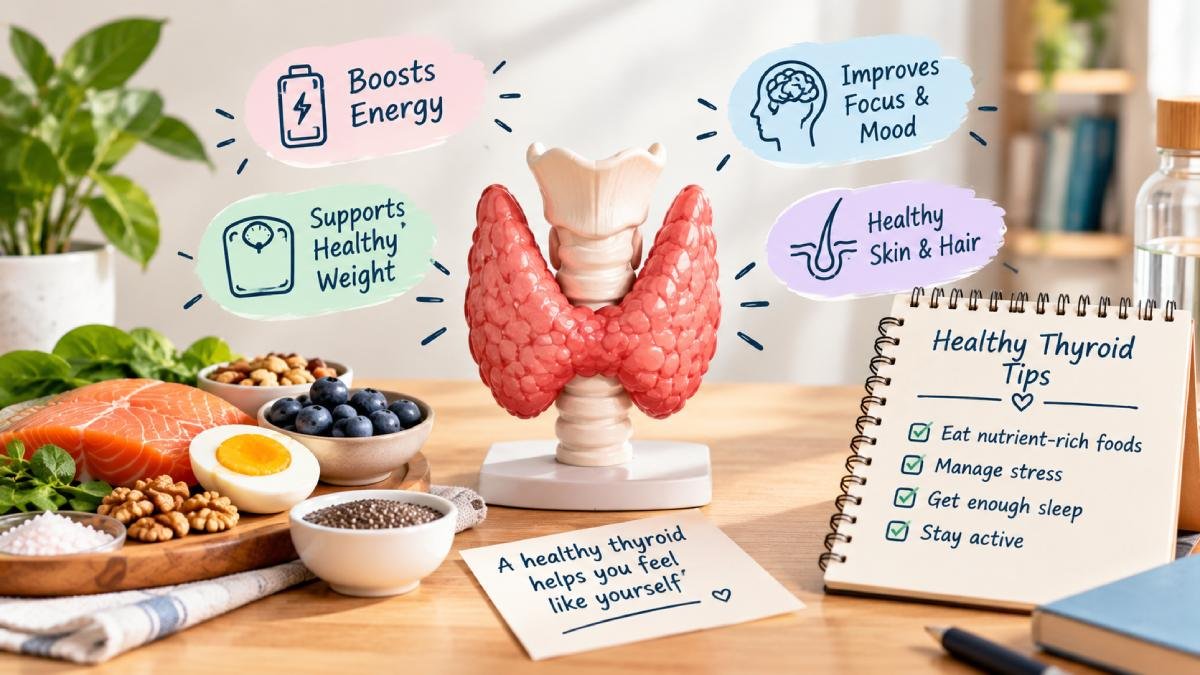
8. What About Exercise?
Nutrition is important, but movement matters too.
You don’t need to begin with intense workouts.
Start with activities you can consistently maintain:
- Walking
- Strength training
- Cycling
- Swimming
- Yoga
- Mobility exercises
If you have been inactive for a long time, gradually increasing your daily movement may be more sustainable than suddenly starting an intense workout routine.
Strength training can be particularly useful as part of a weight-management program because preserving muscle is important during weight loss.
9. Don’t Ignore Sleep
If you’re trying to lose weight, sleep deserves more attention than it usually gets.
Adults generally need around 7–9 hours of sleep per night, and insufficient sleep can be associated with increased hunger, higher calorie intake and less healthy food choices.
So instead of only asking:
“What should I eat?”
also ask
“Am I sleeping enough?”
“Am I moving enough?”
“Am I stressed all the time?”
“Is my daily routine sustainable?”
These factors can make a meaningful difference.
Can You Lose Weight If You Have Hypothyroidism?
Absolutely.
But healthy weight loss with hypothyroidism may require more patience and a more personalised approach.
The first step is making sure your hypothyroidism is appropriately treated and monitored. Once thyroid hormone levels are adequately controlled, weight loss should not be considered impossible simply because you have a thyroid condition.
The next step is to build a nutrition plan that fits your actual life.
That means you don’t have to survive on salads.
You don’t have to eliminate carbohydrates.
You don’t have to drink “detox” beverages every morning.
And you certainly shouldn’t take extra thyroid hormone to try to lose weight. Excess thyroid hormone can cause serious health problems, including effects on the heart, bones and muscles.
Instead, focus on consistency.
Eat balanced meals.
Get enough protein.
Include vegetables and fibre.
Choose appropriate portions.
Move your body regularly.
Sleep well.
And give the process time.
When Should You Speak to a Professional?
If you have hypothyroidism and are struggling to lose weight despite consistently following a healthy routine, it may be worth reviewing more than just your calorie intake.
Your healthcare team may need to consider your thyroid status, medications, symptoms and other health factors.
A personalised nutrition assessment can also help identify whether you are eating too much, too little, missing key nutrients, relying heavily on processed foods, or simply following a plan that isn’t appropriate for your lifestyle.
If you are looking for personalised support, you can connect with the best dietician for thyroid in India for an approach that considers both thyroid health and your individual weight-management goals.
The Bottom Line
Hypothyroidism and weight gain are connected, but your thyroid does not have to control your entire weight-loss journey.
An underactive thyroid can reduce energy expenditure and contribute to weight gain, but the relationship between thyroid function and body weight is complex.
The answer isn’t a crash diet or an extreme “thyroid cleanse.”
It is about getting your thyroid treatment right, eating enough of the right foods, maintaining muscle, staying active, sleeping well and following a plan that you can actually live with.
Weight loss may not always happen as quickly as you’d like.
But slow progress is still progress.
FAQ’s
Recent Posts
- The 90-Day Bridal Diet: What to Eat Before Your Wedding for Weight Loss, Energy and Glowing Skin
- Vegetarian Muscle-Building Diet: How to Hit Your Protein Goals Without Supplements
- How to Get Enough Protein on an Indian Vegetarian Diet
- Hypothyroidism and Weight Gain: Why Losing Weight Can Feel So Difficult
- Weight Loss Without Counting Calories: Can Portion Control Really Work?
Transform your plate, energy, and life with guidance from a dedicated dietician and nutritionist who truly understands your body.