
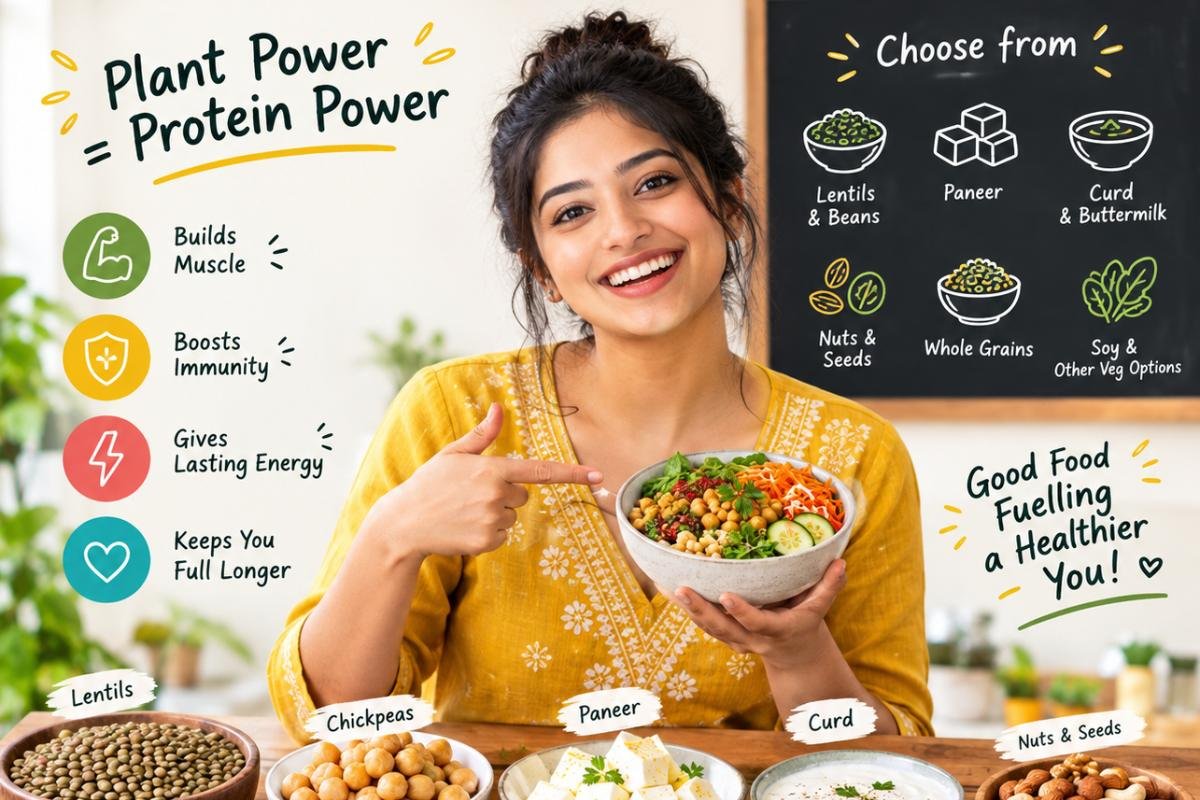
Protein is often the first nutrient people worry about when they follow a vegetarian diet. There is a common belief that protein mainly comes from chicken, eggs or fish, but that is far from the whole picture. A well-planned Indian vegetarian diet can provide adequate protein through everyday foods such as dals, beans, dairy, paneer, curd, nuts, seeds and traditional preparations.
The key is not simply eating more food. It is about choosing the right foods, combining them sensibly and distributing protein throughout the day.
Why Is Protein Important?
Protein is needed for much more than building muscles. It supports tissue repair, helps maintain muscle mass, contributes to healthy hair and skin, supports enzymes and hormones, and plays an important role in recovery.
For anyone looking to lose fat, getting enough protein is especially important because it can help preserve lean muscle while promoting greater satiety. Protein is also essential for older adults, as muscle mass naturally tends to decline with age. A famous dietician in India can help individuals understand that protein needs are not the same for everyone. Factors such as age, body weight, physical activity, health conditions, and personal goals all play a role in determining the right amount of protein a person may need.
This is why simply following a generic high-protein diet may not always be appropriate.
Need Help Meeting Your Daily Protein Needs?
Understanding Indian Vegetarian Protein Sources
Indian cuisine actually offers a wide variety of protein-rich ingredients. The challenge is that many traditional meals are built primarily around carbohydrates, while the protein portion can sometimes be too small.
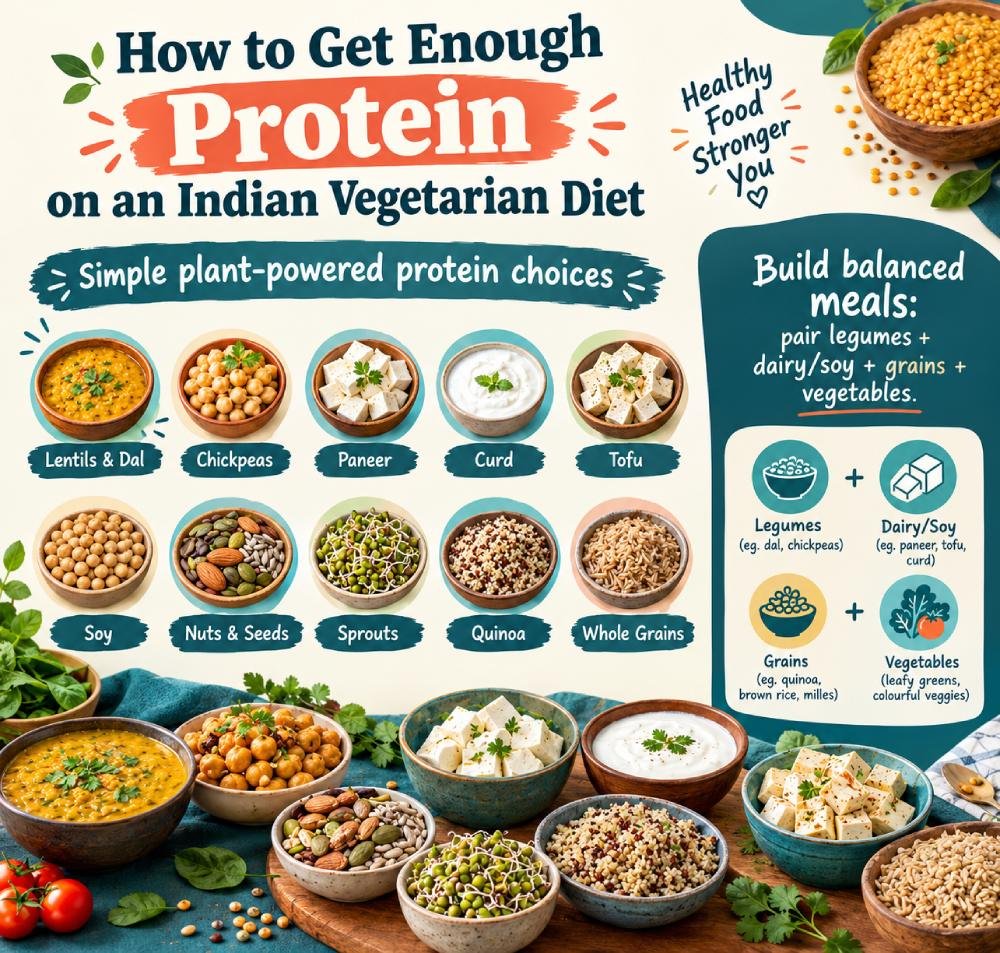
Some useful Indian vegetarian protein sources include:
- Dal and lentils
- Moong, masoor and chana
- Rajma and other beans
- Chickpeas
- Paneer
- Curd and Greek yogurt
- Milk
- Sprouts
- Peanuts
- Almonds and other nuts
- Seeds such as pumpkin, sunflower and sesame
- Besan
- Quinoa
- Traditional combinations such as dal with rice or roti
You do not need to remove rice, roti or other carbohydrates to increase protein. Instead, focus on building a more balanced plate.
Build High Protein Vegetarian Meals Instead of Just Adding Protein
One of the simplest ways to improve your intake is to think about protein while planning every meal.
For example, a breakfast of poha may be filling, but it may not provide enough protein on its own. Adding curd, sprouts, peanuts or a side of paneer can make the meal more balanced.
Similarly, a lunch consisting of roti, sabzi and a small amount of dal may be predominantly carbohydrate-based. Increasing the dal portion and adding curd or paneer can improve the protein content.
Some practical high protein vegetarian meals could include:
- Moong chilla with paneer filling and curd
- Besan chilla with vegetable stuffing
- Paneer bhurji with millet roti
- Dal, rice, vegetables and curd
- Rajma with rice and a bowl of curd
- Chickpea salad with paneer
- Sprouts chaat with peanuts and curd
- Vegetable quinoa pulao with curd
The idea is simple: don’t completely change the way you eat. Upgrade what is already on your plate.
Protein-Rich Indian Foods That Deserve More Attention
Dals are one of the easiest ways to add protein to an Indian meal. However, portion size matters. Having two tablespoons of dal alongside a large serving of rice is very different from having a meaningful serving of dal as part of the meal.
Paneer and curd are also convenient vegetarian protein options. If you consume dairy, these foods can be incorporated into breakfast, lunch, snacks or dinner depending on your individual requirements.
Besan is another underrated option. It can be used to make chilla, cheela wraps or savoury pancakes. Similarly, sprouts can be added to salads, chaats and meals.
Nuts and seeds are nutritious but are also calorie-dense. They are excellent additions to a balanced diet, but they should not necessarily become the primary protein source for someone trying to manage calorie intake.
How to Follow a High Protein Vegetarian Diet Plan
A sustainable high protein vegetarian diet plan does not mean eating paneer at every meal or depending on protein supplements.
Instead, distribute protein across the day.
For example:
Breakfast: Moong chilla + curd
Mid-morning: Fruit + a small portion of nuts
Lunch: Dal + roti/rice + vegetables + curd
Evening: Sprouts chaat or roasted chana
Dinner: Paneer/tofu alternative if suitable + vegetables + millet roti
The exact quantities should depend on your individual nutritional requirements.
Another important point is variety. Eating the same protein source every day is unnecessary when Indian cuisine provides so many options.
Vegetarian Diet for Protein: Is Combining Foods Necessary?
You may have heard that vegetarians need to carefully combine different foods at every meal to get “complete protein.”
Protein quality is important, but you do not need to obsessively combine specific foods in every single meal. Eating a varied diet across the day provides different amino acids from different foods.
Traditional combinations such as dal and rice or dal with roti can still be valuable parts of a balanced vegetarian diet.
What matters more is the overall quality and variety of your diet, along with getting enough total protein.
What About Protein Powders?
Protein powders can be useful in certain situations, especially when someone’s protein requirements are high or when it becomes difficult to meet those requirements through regular food.
However, they are not compulsory for every vegetarian.
Before adding a protein supplement, look at the existing diet first. If the diet is low in protein because breakfast contains mostly carbohydrates, lunch has very little dal and snacks consist mainly of biscuits or namkeen, simply adding a scoop of protein powder does not address the overall dietary pattern.
Food should generally form the foundation of your diet, with supplements used when genuinely useful.
Common Mistakes Vegetarians Make While Trying to Increase Protein
One common mistake is assuming that every “healthy” food is automatically high in protein.
For example, fruits and vegetables are essential for good health, but they should not be counted as major protein sources.
Another mistake is relying heavily on nuts and seeds. They provide protein along with healthy fats, but large quantities can significantly increase calorie intake.
A third mistake is focusing on only one meal. Having a protein-rich dinner does not necessarily compensate for a very low-protein breakfast and lunch.
Finally, many people increase protein but forget about fibre, vegetables, hydration and overall dietary balance.
A healthy diet is not defined by one nutrient alone.
Make Protein a Part of Your Everyday Plate
The easiest way to improve protein intake is to stop thinking of protein as something that needs to be added separately.
Look at your regular meals and ask: Where is my protein?
Can you add curd to breakfast? Increase the dal at lunch? Include paneer in dinner? Add sprouts or roasted chana as a snack?
Small changes made consistently are usually easier to maintain than completely changing your eating pattern.
For people following a vegetarian diet for protein, the goal should be a varied, balanced and personalised approach rather than simply chasing the highest possible protein intake.
If you are looking for personalised nutrition guidance, you can connect with a famous dietician in india to understand your individual protein requirements and create a sustainable eating plan.
FAQ’s
Some of the most useful Indian vegetarian protein sources include dals, lentils, chickpeas, rajma, sprouts, paneer, curd, milk, besan, peanuts, nuts and seeds. Including different sources throughout the day can help improve overall protein intake while also providing fibre, vitamins, minerals and other important nutrients.
Recent Posts
- The 90-Day Bridal Diet: What to Eat Before Your Wedding for Weight Loss, Energy and Glowing Skin
- Vegetarian Muscle-Building Diet: How to Hit Your Protein Goals Without Supplements
- How to Get Enough Protein on an Indian Vegetarian Diet
- Hypothyroidism and Weight Gain: Why Losing Weight Can Feel So Difficult
- Weight Loss Without Counting Calories: Can Portion Control Really Work?
Transform your plate, energy, and life with guidance from a dedicated dietician and nutritionist who truly understands your body.